
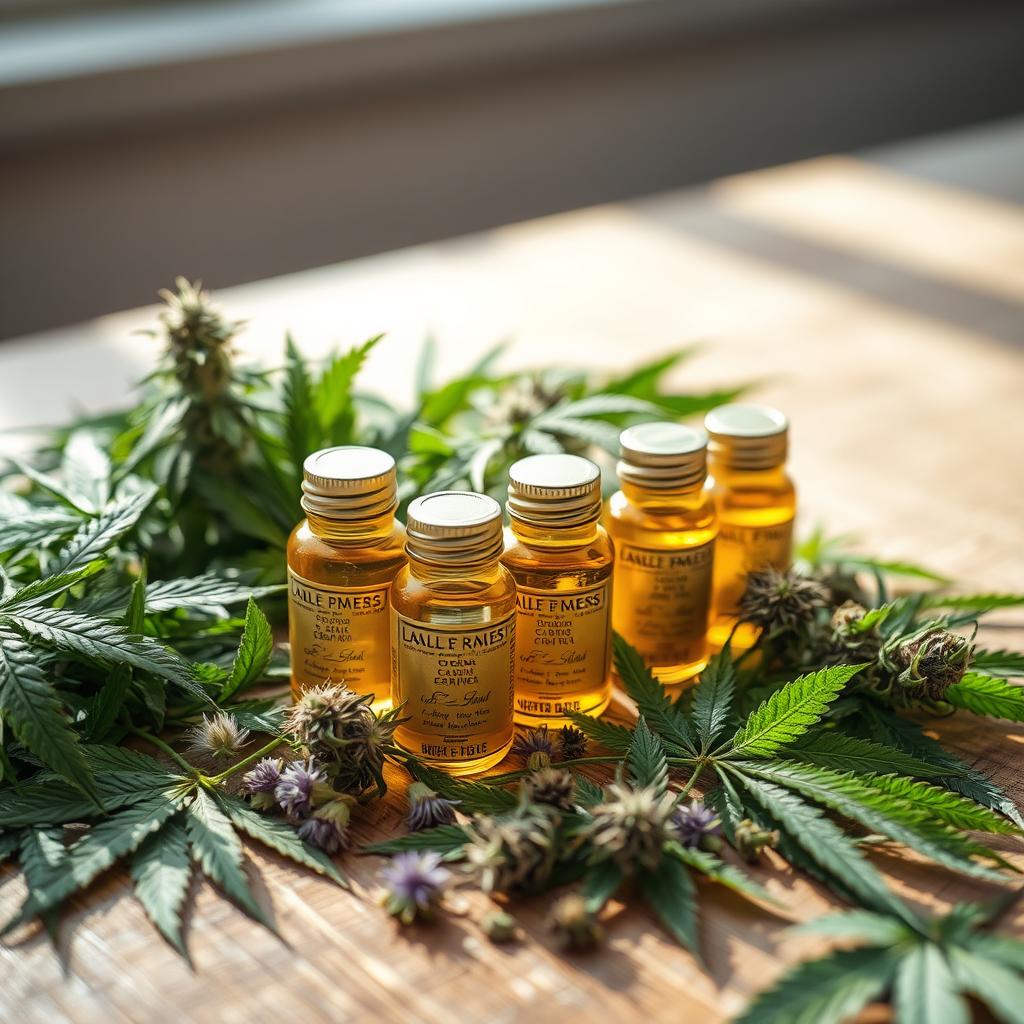
There’s a good chance you’ve heard about CBD
There’s a good chance you’ve heard about CBD, which seems to be the most famous cannabinoid in the wellness industry. However, as the interest in the hemp plant increases, you’re beginning to notice new alphabets appearing in labels: CBN, CBG. Perhaps this string of alphabets is beginning to look confusing to you. Then what are the above? Are these similar to CBD? Will they make you high? Knowing the difference between CBD, CBN, CBG is essential to proper product selection relating to one’s wellness needs. These substances interact with the body in a slightly deviation of a typical pattern and bring some unique expectations.
In the course of this guide, the faces of these three cannabinoids will be revealed. We will go through the identities of each of the cannabinoids, their modus operandi, what may actually benefit their consumers and how they differ. After this, CBD, CBN, and CBG will not be as ambiguous as they were and the decisions made will not be chaotically distracting any further.
What Are Terpenophenols?
We are going to talk about CBD, CBN, CBG but before we do this, let us explain what the basics are and then move further. Cannabis has naturally occurring chemicals known as cannabinoids. Maybe more than 100 of these compounds have been discovered in the plant with each having their own unique function and effects so far. Tetrahydrocannabinol or THC is most infamous due to its mind-altering presence. However, Cannabidiol or simply CBD is popular for its health benefits without causing a high.
The interaction with such compounds takes place within the body’s endocannabinoid system (ECS). This is a system endowed with receptors, enzymes, and endocannabinoids. The problem is – such compounds help maintain homeostasis. There are different functions and mechanisms that can regulate sleep, mood, appetite, pain, or the immune response. The above may include easy and usable plant-based cannabinoids like CBD, CBN, CBG interacting with that system so as to achieve varied results in the body’s well-being without certain side effects.
An Ideal Cannabidiol or CBD
Cannabidiol, or CBD, is the most voluminous and explored non-psychotropic hemp cannabinoid highlighting the hemp plant. It’s the one that initiated the wellness trend still prevalent today, and with good reason. Additionally, unlike THC, this compound does not cause intoxication, making it a much more memorable choice for individuals seeking comfort without intoxication.
The Working Mechanism of CBD
CBD – cannabidiol behaves with the Endocannabinoid System in a little bit of a different way than THC. It does not intersect with cannabinoid one and two (CB1 and CB2) receptors like THC does. Rather, the active component is involved in preventing the destruction of such endocannabinoids thus allowing them to become more efficient. This receptor is also known to modulate several receptors’ activity that are not cannabinoid in nature, hence, provides CBD, CBN, CBG, and other non-glucogenic exogenous cannabinoids in particular.
CBD and Its Possible Health Advantages
Many studies have been conducted in regards to the use of CBD as a treatment or approach to different ailments. It gained this reputation because of its practicality amongst others. She takes CBD for a couple of reasons:
- Stress and Anxiety Relief: A number of people say that they feel calm and relaxed once they take CBD. There is evidence to prove that CBD helps improve a person’s mood and reduce anxiety.
- Pain and Inflammation: CBD is a popular pain relief aid. This is because many people believe it acts as an anti-inflammatory that helps to calm down inflammation in muscles and joints.
- Improved Sleep: Given that CBN calms one’s body and mind, they are likely to suffer sleeplessness to a lesser degree, and when they do sleep, they sleep peacefully.
- Neuroprotection: Some studies show that CBG has antioxidant and anti-inflammatory compounds that are believed to be beneficial to the brain.
CBD is the most well-known out of CBD, CBN, CBG, and thus, it can be found in many different forms such as oils, tinctures, capsules, edibles, topicals, and so much more. This makes the compound easy to consume for everybody.
CBN (Cannabinol): The Sleepy Cannabinoid
Cannabinol, or CBN, is also nicknamed the “sleepy” cannabinoid. What entertains me about CBN is never the fact that the Cannabis plant produces it in a large amount. Instead, it is the product of aging and the degradation of THC upon air and/or heating. This explains why old marijuana has a very lethargic response to users as CBN is in larger quantities.
The Mechanism of CBN Action
CBN binds weakly to the CB1 receptor and is more like THC than it is CBD in that respect. However, it is only 10% as active as THC, which also means that a high cannot be attained from it, especially in the low concentrations of it in consumer products. Its greatest distinction may be its use as a sedative, but that too needs rigorous in-depth studies to be substantiated in human beings.
Advantages of CBN as a Treatment
Less data is available for CBN in comparison to CBD with THC, but the initial studies and speculation are encouraging especially in relation to one particular aspect of it.
- Sleeping Aid: This is CBN’s refrain ability. A lot of users state that CBN-containing supplements help in sleeping better. The combination with CBD is rather quite common in order to maximize this effect or the entourage effect, which will be discussed in detail further on.
- Alleviating Pain: According to some experiments, this cannabinoid may have some analgesic effects. In particular, it may interact with neurons that respond to capsaicin, which is the component present in hot chili peppers.
- Increasing Appetite: In comparison to CBD, CBN shows potential to increase food intake, especially insofar as appetite depressant actions of the former are concerned.
According to reviews, CBD, CBN, CBG is most favorable in the case of CBN, more especially during the day. Usually, it takes the form of claiming “sleep aids” products like drops, gummies, or capsules, which are to be taken before sleeping.
CBG, or Cannabigerol – The Real ‘Mother’ of Cannabinoids
The word cannabigerol (CBG) has often been described to be a progenitor or “stem cell” of cannabinoids. This is because it is upon the stem structure CBGA (cannabigerolic acid) that all the other major cannabinoids such as THC, CBD, and even CBC are produced from within a cannabis plant. During the development process, the enzymes change CBGA into any other cannabinoid forms of its molecules, hence its scarcity even in mature plants with less than 1% of CBG found in most cases.
In addition to improvements in the understanding of genetics in transgenic plants, selective breeding and selection of parameters in extraction, farmers of hemp have been able to successfully produce varieties with high content of CBG which in return opens up more applications. As with the cannabinoids CBD and CBN, CBG is also non-psychoactive.
What the CBG Action Mechanism Entails
CBG acts on CB1/CB2 receptors in different parts of the body such as the brain in a manner similar to CBD and CBN. CBG – this potential is found in the way CBG can modulation affects how the body functions with regard to inflammation, pain, and even the gut. It is this direct binding that distinguishes the mechanism of action of CBG from CBD and gives rise to a whole new range of potential effects.
Possible uses of CBG
Investigations on CBG have not gone very far as yet, but the results obtained so far are quite promising. So far, they include the following:
- Gastro health: It is believed CBG might help fight against inflammatory bowel diseases because it is highly anti-inflammatory.
- Neuroprotection: In early studies, CBG, like CBD, has emerged as a possible neuroprotective agent that may be able to protect nerve cells from destruction.
- Eye health: The way CBG works suggests that it can help with lowering the pressure within the eye, which can be used to manage things like glaucoma.
- Antibacterial Properties: It is interesting to note that CBG does offer strong antibacterial properties even against a few drug-resistant bacteria such as MRSA demonstrated in vitro.
In the cannabinoids of CBD, CBN, and CBG, CBG appears to be targeting stomach and antibacterial benefits more than any of the others. In most cases, it is also used with CBD to make the wellness product better.
CBD vs CBN vs CBG Comparison
It is hard to identify the differences; therefore, it would be better to compare both CBD, CBN, and CBG at each point. Knowing this will enable you to assess the suitability of any of the cannabinoids for you.
| Feature | CBD (Cannabidiol) | CBN (Cannabinol) | CBG (Cannabigerol) |
|---|---|---|---|
| Primary Source | Richly present among strains of hemp | Metabolized end product of tetrahydrocannabinol (deterioration) | A precursor or the “parent” cannabinoid |
| Psychoactive? | Negative | Negative (albeit just slightly noticeable, non-intoxicating) | Negative |
| Reputation | Overall Health, Relieves Tiredness and Tension, Pain Management | Better Sleep Inducement, Fast Sleep Inducement | Protects Intestinal Tract, Anti-Inflammatory Effect |
| Endocannabinoid System Activation | Modulates the activation of the receptors | Slightly activates CB1 bonding | Specifically attaches to both CB1 and CB2 receptors |
| Most Frequent Case of Use | Everyday application for pressure, anxiety, ache | Nighttime application for rest | Localized use application for inflammation and intestinal issues |
Entourage Effect: Two is better than one.
In understanding CBD, CBN, CBG degrees of competence, knowing about the entourage effect is quite pertinent. Instead, this is the fundamental premise that they work more efficiently together than they do alone. Most usage of cannabinoids and other plant constituents such as terpenes and flavonoids include multiple cannabinoids in a single use, and these all have an enhancing effect on one another’s activity.
That is why there are so many products combining various cannabinoids, including the following:
- CBD + CBN: This is a very common combination that serves as a sleep prescription. CBD calms the body and the mind, while CBN is the sedative ingredient which makes sleep prescription more effective.
- CBD + CBG: This formulation is usually found in anti-pain and anti-inflammatory items. When combined, the two cannabinoids’ anti-inflammatory effects can be more effective than either of them on its own.
Products that include different cannabinoids are referred to as either “broad spectrum,” meaning no THC, or “full spectrum,” with traces of THC up to 0.3%. For example, if you want to enjoy the “entourage effect,” then find such products as contrasted to “CBD isolate.” However, the latter may have only pure CBD inside.
FAQs or Frequently Asked Questions
Are CBD, CBN, CBG permissible?
The 2018 Farm Bill makes cannabinoids derived from hemp inherently legal across the United States, provided that any eventual product comprises less than 0.3% THC in its dry mass. However, some states impose more stringent measures, so it is prudent to always check the relevant state laws before making the purchase.
What Are the Chances of Testing Positive Based on CBD, CBN or CBG Use?
THC is detected in the majority of drug tests that are done for common purposes and not CBD, CBN, CBG. There may be more than the allowable level of THC in these range of products, especially the full spectrum products. There is a very slight chance that the small amounts present may build up in someone’s system and so trigger a false positive, although it can hardly be expected that they will cause intoxication. That means if you are going to undergo a drug test you should stick to “broad spectrum” or “isolate” cannabinoid formulations in which THC content is expressly excluded.
What product should I buy?
Success entirely depends on what you intend to achieve while selecting the product. In case your aim is general support including wellness and stress relief, then it is advisable to begin with any CBD dominant supplement. If you intend to get a good night’s sleep, then you should focus on finding a product with CBN in it. If you are curious about treatment related to inflammation or gut health, CBG will be helpful. A CBD/CBN/CBG blend is more appropriate for many responders.
Does it cause any reactions?
Most users of these cannabinoids say they are well tolerated. Nevertheless, for some, there might be a mild side effect of either drowsiness, dry mouth, or even appetite changes. Making sure that you are not overpowering your wholesome essentials is always a good idea while introducing a new supplement. Additionally, it may be necessary to consult with a professional if any medication is being taken on the onset of use of any coconut oil, including those CBD, CBN, CBG supplements.
Closing Thoughts
It is impossible to ignore the reality that the cannabinoid industry is extensive and surpasses cephalalgia cannabidiol (CBD). As more research is conducted, there is a more in-depth exploration of the effectiveness of other cannabinoids such as CBN and CBG. While the use of CBD is safe and holistic enough, CBN stands out most when discussing sleep benefits or remedies and in cases of inflammation, as well as promoting gut health, CBG is quite remarkable. Understanding CBD, CBN, CBG and their differences helps you avoid the generic solutions and implement a more suitable approach to your well-being. The use of these potent molecules, whether separately or in combination with the rest of the ingredients to enable the entourage effect, provides interesting possibilities of enhancing one’s health through plants and abstaining from medicines.
