
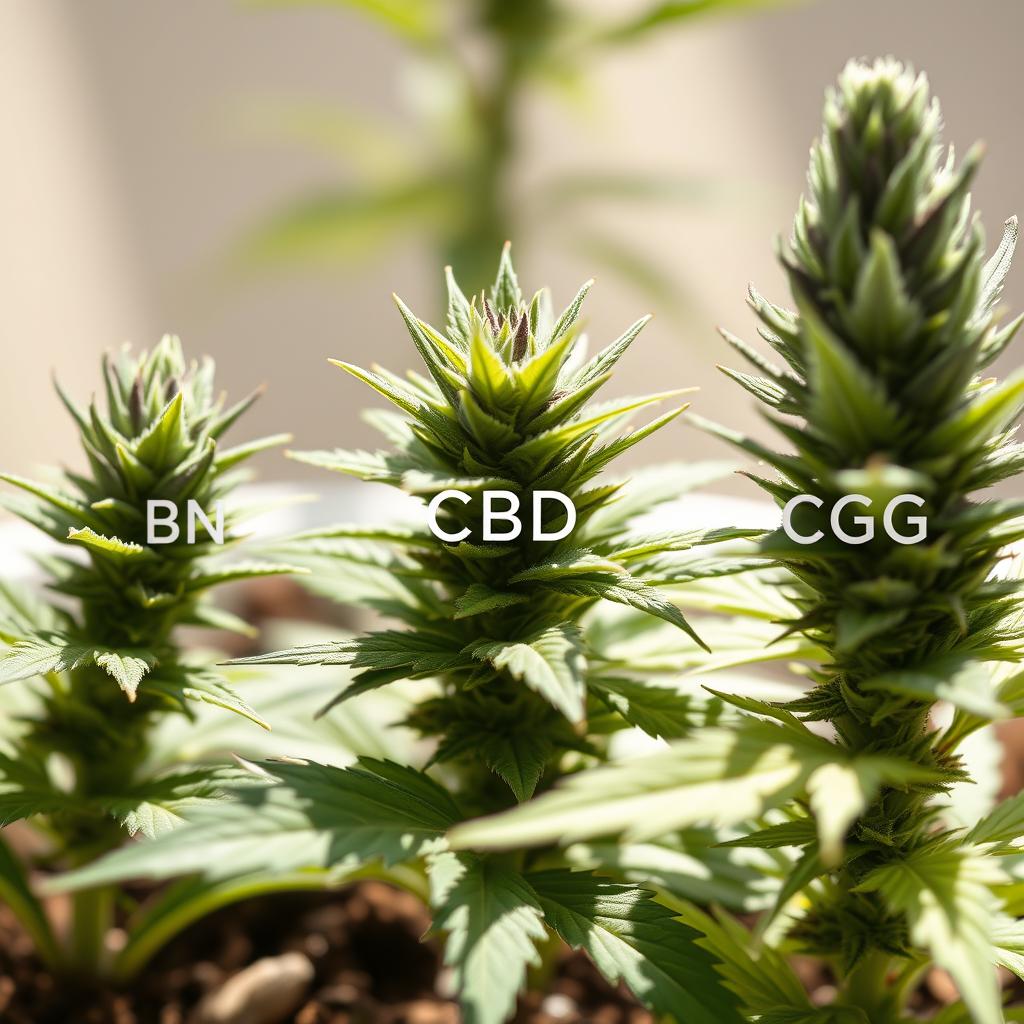
The wellness industry was revolutionized with the entry of the cannabis plant derived products, but now, the issue extends beyond THC and CBD only.
CBN, Cannabis, as well as CBG, are three other interesting compounds that are making waves in the market. If you have been looking at the labels wondering what the differences are, you are not the only one. The details that differentiate the cbn vs cbd vs cbg discourse is what determines which selection maps to one’s health objectives.
Scope of Cannabinoids: Recap
To compare and contrast these compounds, it is necessary to cover some basic concepts. Cannabinoids are complex structures found in the cannabis Sativa plant. Candice explained that more than 100 cannabinoids are known and they appear to have different actions in the body. Such variations are possible because such cannabinoids interact with different components in the Endocannabinoid System (ECS) of a human body.
Consider the ECS as a regulator within the human system. This is a system composed of cannabinoid receptors, as well as enzymes and cannabinoids that are produced within the body (endocannabinoids) which play important roles in control of processes like sleeping, mood, appetite, pain sensation and immune system. Cannabinoids derived from plants (known as phytocannabinoids), e.g. CBD, CBG and CBN may also modulate this system, thereby aiding its functions.
The Participants: Intra Cannabinoid Competition of CBN vs CBD vs CBG
All three of these cannabinoids are derived from the same plant, yet they are radically different when it comes to their history, characteristics, and applications. Unpicking the cbn vs cbd vs cbg conundrum allows one to see the contribution of each out of the three.
CBD: The Go-to Cannabinoid
The most well-known and studied non-psychoactive cannabinoid is cbd or cannabidiol. It is gotten from cannabis (hemp) which is a cannabis plant that has a very low concentration of thc which is within 0.3% of the dry weight. Most importantly, unlike thc, cbd does not cause euphoria or make one feel ‘high’. Most enjoy cbd for its tranquilizing and self-stabilizing property.
CBD functions in an indirect manner with the endocannabinoid system. It does not operate by directly occupying the main cannabinoid receptors (CB1 and CB2); rather, it is believed to obstruct the degradation of endocannabinoids within the body making them more potent. It affects other receptor mechanisms along with the CB receptors, resulting in a host of possible benefits to consumers, such as helping to cope with normal pressure, mitigating the inflammation caused by exercise, and building the feeling of tranquility.
The Cannabinoid of Cannabinoids: CBG or Cannabigerol
Cannabigerol, abbreviated as CBG, is commonly referred to as the “mother” or “stem cell” of cannabinoids. This is because the majority of the cannabinoids, such as THC and CBD, originate from cannabinoids that are initially in the form of CBGA, or cannabigerolic acid, which is simply the acidic version of CBG. Enzymes work towards causing the conversion of CBGA to THCA, CBDA and other cannabinoids precursors in a developed plant.
Because of its transformation into other forms of compounds, mature cannabis nuts only have trace amounts of CBG, less than 1% usually. This is one of the reasons why such products containing CBG are very complicated and expensive to prepare. Unlike Cannabidiol which interacts with these receptors, Cannabigerol is suggested to directly bind to both CB1 and CB2 receptors, thus, causing more pronounced effects. Preliminary investigations point out that Cannabigerol can help with digestion, inflammatory response as well as some aspects of neuroprotection. This specific aspect is very important while comparing cbn vs cbd vs cbg effects.
Cannabinol (CBN): Also Known as the Sleeper’s Cannabinoid
CBN, also known as cannabinol, is a very interesting compound with an interesting history. In the cannabis plant, however, it is not naturally produced in high amounts. The reason behind this is that CBN is derived from THC, an active constituent as already explained before because of heat oxidation and also some degradation processes. It is more-or-less how THC ages. This explains why the level of CBN tends to be more in old weed.
Because of the above reason, CBN is considered as a weak psychoactive substance, but much milder than THC; in most cases, even enough doses do not induce any buzz, especially in those lower than enough doses within particular very small amounts of doses carried out commercially. The ability of CBN to serve as a sleeping aid has enhanced its image among the masses. For these reasons, CBN has become an indispensable element of many individuals’ lives, who consume it most especially down periods to induce sleeping or resting effects. These applications night rather than daytime also elucidates why so many people look at other aspects when deciding between cbn vs cbd vs cbg.
CBN vs CBD vs CBG: Head to Head Comparison
In order to provide further illustration to the cbn vs cbd vs cbg question, the assessment of the above shows how different and how similar they are. In particular, the differences up to the most relevant will therefore be stated in this table.
| Feature | CBD (Cannabidiol) | CBG (Cannabigerol) | CBN (Cannabinol) |
|---|---|---|---|
| Starting Point | Its highest concentrations remain in marijuana as well since it’s the main cannabinoid from hemp. | It is classified as one of the minor cannabinoids and known as the hemp “mother.” | This is again another minor cannabinoid formed due to the breakdown of THC. |
| Main Focus | Calming effect, stress reduction, and some anti-inflammatory properties. | It addresses the digestive tract, which protects from inflammation and looking after the nervous system’s health. | It focuses on aiding in sleep, relaxation, and the tranquil effect giving properties. |
| Mode of operation (in simple terms) | In this case, it works on the ECS in a more advanced way as well as other receptors. | There is a profound affinity for the CB1 and CB2 receptors as well. | Has weak affinity with the CB1 receptor, indicating a mechanism of action. |
| Psychoactive? | No. It doesn’t get you intoxicated. | No. It doesn’t get you intoxicated. | In small amounts yes, but doses required to experience a high are quite high. |
| Percentage of Hemp Bearing It | High (over 20%) | Low (in most cases) | Very low (inexistent or hardly measurable) |
Detailed Examination of the Therapeutic Effects: What Cannabinoid Can be Best for You?
Deciding which fraction of the cbn vs cbd vs cbg contest is yours is often the factor through which one disputes the pros and cons of these compounds. At present, some studies support various claims regarding the benefits provided by each cannabinoid.
For Use in Sleeping and Resting
Regarding Medicinal Properties, the undisputed leader is CBN. This is because of its reputation as the “sleep inducing cannabinoid.” That reputation is supported also by the fact that, anecdotally and in early evidences, there is a calmative effect in CBN action. Many products nowadays have CBD plus some CBN (cannabinoid), to satisfy the expectation of product users. ‘CBD combination works better than a single cannabinoid due to the entourage effect.” This does not negate the level of utility of CBD in the practice. To add – CBD does directly help in getting a better quality sleep by tackling some of the contributors to sleeplessness like anxiety.
In Cases of Pain and Tension
This section focuses on the alchemy of CBD and CBG. Both cannabinoids are known to possess remarkable properties in relation to their capability to control inflammation. CBD is a popular ingredient in pain and inflammation supplements for treatments that may be as a result of workouts or routine activities. However, CBG research is also fascinating and this is because it has been found in some studies that inflammation in some cases like that of inflammatory bowel disease (IBD) can be relieved very well. A form of product having both CBD and CBG could be very helpful in relieving common pains.
Calming down Stress and Anxiety
In the world of cannabinoids, CBD is the most widely known and applied to issues related to stress and anxiety. So much so that many studies focus on its ability to quell the agitated nervous system, thus becoming the go-to solution for everyday cyclic tension and healthier mind stance. CBG is similar to CBD where studies are considering possibilities of its anti-anxiety effect. It is thought to be useful because it increases anandamide, also known as “bliss molecule,” as one of the endocannabinoids in the system. When it involves the usage of cbn vs cbd vs cbg for daytime stress, people tend to go for CBG or CBD instead because of the fact that CBN has a more sedating effect.
Maintaining Stomach and Appetite Health
With the shift in focus towards health and wellness, CBG is creating a niche market with its benefits related to gut care. One such potential benefit includes the reduction of intestinal inflammation, after animal studies demonstrated that CBG can decrease inflammation in cases of intestinal diseases, such as IBD. Other investigations have been carried out to evaluate its use as an appetite booster, given that CBD is not effective in increasing hunger. With that in mind, it helps in easing the cbn vs cbd vs cbg decision where the focus is only on the gastrointestinal tract.
Knowledge of All Potential Adverse Effects and Their Safety
There is a general consensus that those of CBD, CBG and CBN are relatively well tolerated as well as safe. They do not cause cahoots with THC and their dependency potential is minimal. Nevertheless, some users may suffer mild adverse effects such as:
- Sleepiness (particularly in relation to CBN) or tiredness
- A sensation of dry mouth
- Surpassing or ailing trouble inside the stomach or diarrhea
- Fluctuations in appetite or body weight
Consulting with a healthcare provider is essential before ingesting any nutritional supplement, especially cannabinoids. Irrespective of one’s health condition, it is important to consult a doctor if they are breastfeeding, pregnant, or on any prescription medications, just to be safe. Like grapefruit juice for some people, cannabinoids also interact with some medications in the way that they control the rate at which your body breaks them down.
What’s the Current Situation with the Law: How Legal is the Chronic CBD, CBN, and CBG?
On the legality of such cannabinoids in the U.S., the focus is on the purview of the 2018 Farm Bill. The bill decriminalized hemp and its products at the federal level, and as such, it was also mandated that hemp should not be above 0.3 percent delta 9 tetrahydrocannabinol. Thus, CBN, CBD and CBG are not illegal to make, buy and consumption federally so long as they are obtained from a permitted type of hemp plant.
Though federal laws apply against certain practices, state laws are usually more prohibitive. Several states have regulations in place which govern the distribution of cannabinoid products. It is advisable to, first, inquire with your jurisdictional laws so as to avoid dreadful scenarios that may arise. Legal issues remain a pertinent question within the framework of the cbn vs cbd vs cbg product debate.
Picking Out Quality Products
In today’s market, you will find dozens upon dozens of countless brands offering cannabinoids. Among them, only a few will be different to the rest in terms of safety and efficacy of their products. Features of such products include:
- Independent Testing: This must be conducted by a third party laboratory and is not optional. This is the reason why respectable companies entrust their products in the hands of a third party to conduct a performance verification analysis on their samples.
- Analysis Certificate: Also known as a COA, the company’s product page or website should on most occasions provide customers with easy access to the report. A certificate of analysis clearly presents the CBN, CBD, CBG, and THC contents of the formulation and indicates its safety as free from pesticides, heavy metals, and such other residual solvents.
- Proper Labeling: The product information must indicate the quantity of cannabinoid available in a bottle and per a single dose of the product.
Questions and Answers (FAQ)
Is it okay to use CBN, CBG and even CBD?
Yes, it is possible. As it is noted, the consumption of several cannabinoids is hypothecated to create the “entourage effect”, where it is assumed that the cannabinoids possess a joint effect that each cannabinoid when consumed alone has increased run by. Dimensioned canna, as well as broad and full-spectrum products with enhanced will enhance the dose consumed for this purpose of the consumer.
Will any of these; CBN, CBD or CBG, get me high?
No, they won’t. As long as these compounds are obtained from hemp and contain THC at levels of less than 0.3 percent, both CBD and CBG are not psychoactive and will not result in a high. CBN itself possesses weak psychotropic effects; however, such effects do not result in a high within the levels found in most retail dosing and are instead characterized by the onset of sleep.
Among the cannabinoids CBN, CBD and CBG which one is stronger?
It’s actually more about the various types of impact rather than “strength”. In this case, one category is not necessarily stronger than the other in a literal sense. The best thing would be to know the target, and only then a decision can be taken. It should be noted that CBN is the ‘most potent’ as a sleep aid, while CBD has become synonymous with stress, or rather the lack of it. The question of cbn vs cbd vs cbg, therefore, concerns using the correct implement for the appropriate task.
What is the time frame for these functions?
The time taken to work depends on the method of consumption. Tincture (oil) which is placed under the tongue is absorbed the fastest, within fifteen to forty-five minutes. In contrast, foods such as gummies and capsule tablets will travel to the stomach and the absorption rates tend to be about sixty to ninety minutes or even more.
Summary
The argument that makes cbn vs cbd vs cbg goes beyond finding one of these molecules as being better than the other. These molecules serve different purposes and should be understood. CBD is still a great option for unproblematic wellness and tension. If CBG is upped for stomach and anti-inflammatory purposes, CBN is very well-practiced for insomnia, or drug-free sleep enhancing purposes. With enhance in research, comprehension of these highly interesting chemicals and their ability to improve health will advance significantly. This means, on one’s health agenda, one can very comfortably and safely consider cannabinoids given the appropriate quality and lab certified products are used.
